Our housing Cooperatives
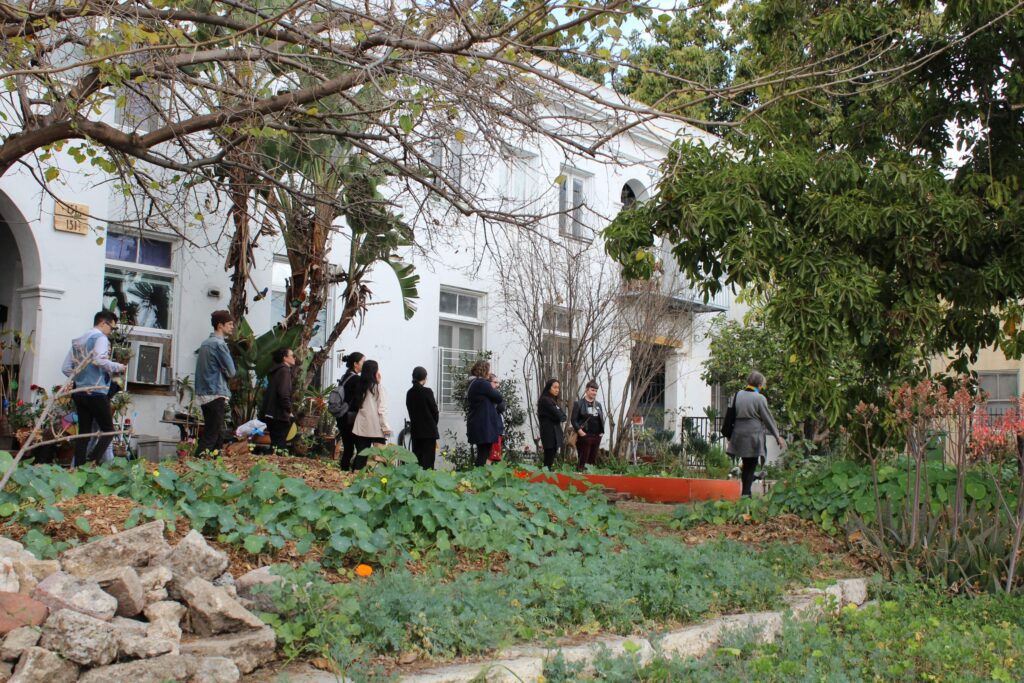
Urban Soil / Tierra Urbana is a 47-unit limited-equity housing cooperative located on the border of Koreatown and Rampart Village, within the community commonly known as the LA Eco-Village. It is an intentional cohousing community that self-governs through a consensus-based decision-making process.
Its mission is to provide permanently affordable housing to very low- to moderate-income households while sustaining a diverse community. Members work together to publicly demonstrate higher-quality living patterns that minimize negative environmental and social impacts.
The cooperative’s nonprofit 501(c)(3) corporation is led by a resident-elected Board of Directors and supported by a Management Committee and a Super.
For questions about vacancies, please visit: https://ustula.org/
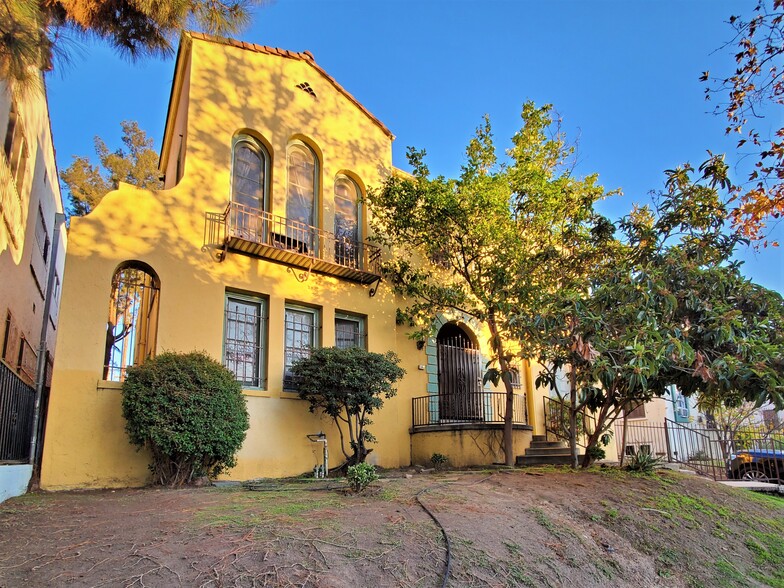
Señoras For Housing is a 4-unit limited-equity housing cooperative located in Koreatown, sometimes referred to as Señorita For Housing. The building came into collective ownership after years of organized tenant resistance against a landlord who attempted to evict the residents in order to redevelop the property into higher-cost housing.
Utilizing LA County funds, BVCLT acquired the building, which was rehabilitated through a loan from Genesis LA. The property is currently in transition toward resident ownership, working alongside the same tenants who fought to remain in their homes.
Led by Black and Brown women, the cooperative stands as a testament to the power of tenant organizing and the belief that tenants can fight back, win against displacement, and collectively control their housing and means of living.
No vacancies at this time.
Our Rental Buildings
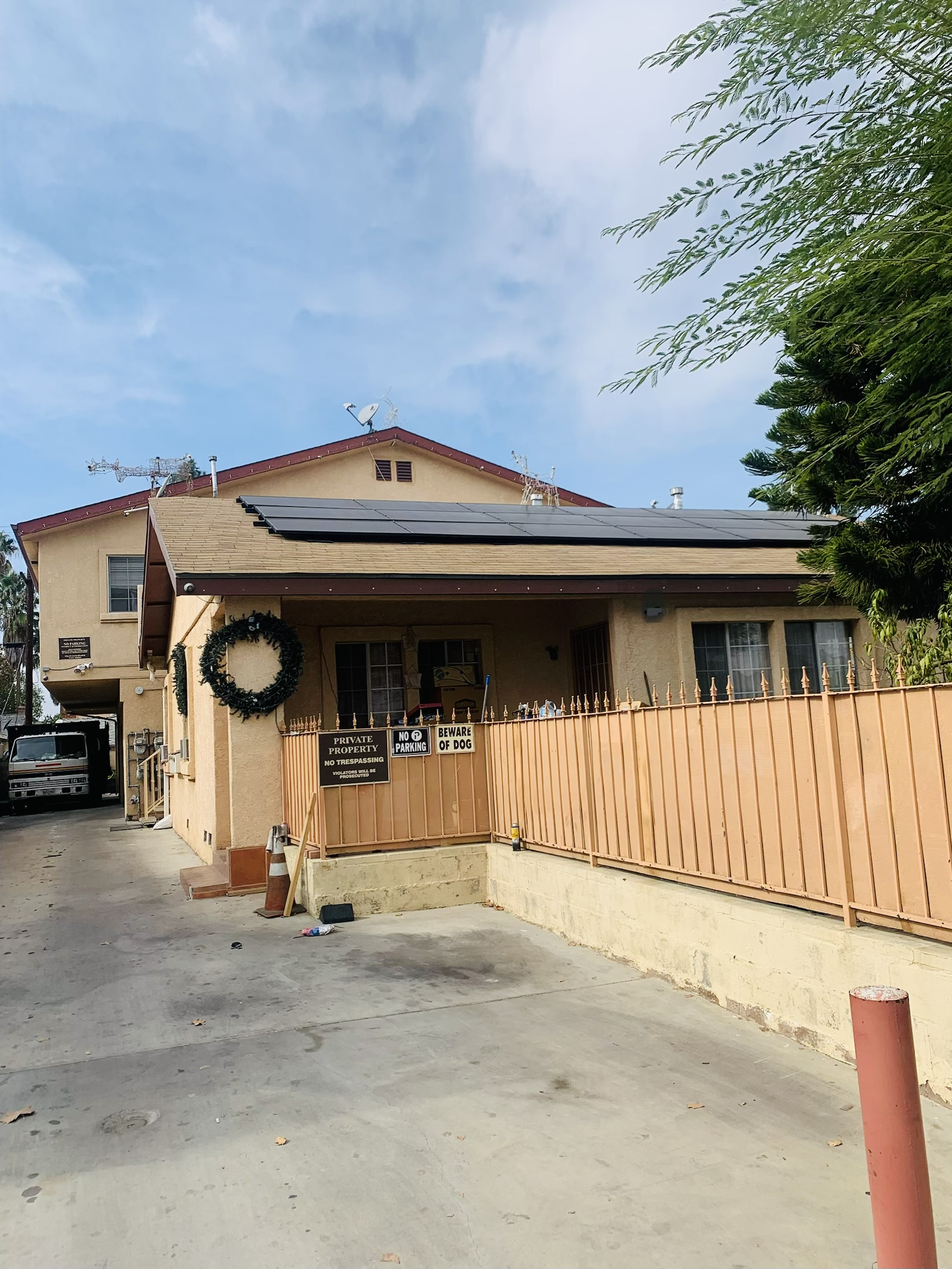
Lemp is a 5-unit property acquired with Los Angeles County funding after BVCLT agreed to purchase a site within Supervisor District 3. BVCLT moved forward with acquiring a building in North Hollywood due to its direct connection to the Red Line subway, which runs between Koreatown and North Hollywood, strengthening geographic and community ties. The seller was a community member who wanted to transfer the building to an owner committed to maintaining housing stability for the existing tenants. The tenants themselves are long-term North Hollywood community members with deep neighborhood roots.
The property was rehabilitated using a loan from Genesis LA, improving living conditions while preserving affordability and stability.
Since acquisition, tenants have met to learn about the community land trust model and are beginning to build shared governance practices, including meeting together to make collective budget decisions.
No vacancies at this time.
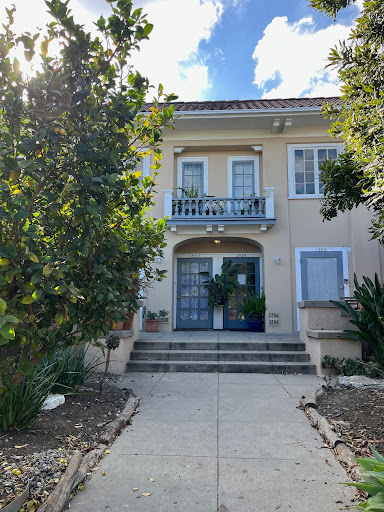
White House Place was acquired through long-standing community relationships, in partnership with its all-volunteer Board of Directors and LAEVI. The four-unit property includes a shared backyard and reflects a community-driven approach to preservation.
Community members repaired one of the garages and converted it into a small commercial space as part of their pedestrian advocacy and neighborhood activation efforts.
BVCLT did not utilize any public subsidy to acquire this building. Initial acquisition funds came from a community revolving loan through CRSP and a loan from Genesis LA. The property has since been refinanced through a national loan fund.
Multiple tenants at White House Place actively steward the property through landscaping, maintenance, and shared repairs, with BVCLT supporting.
No vacancies at this time.
Other Sites
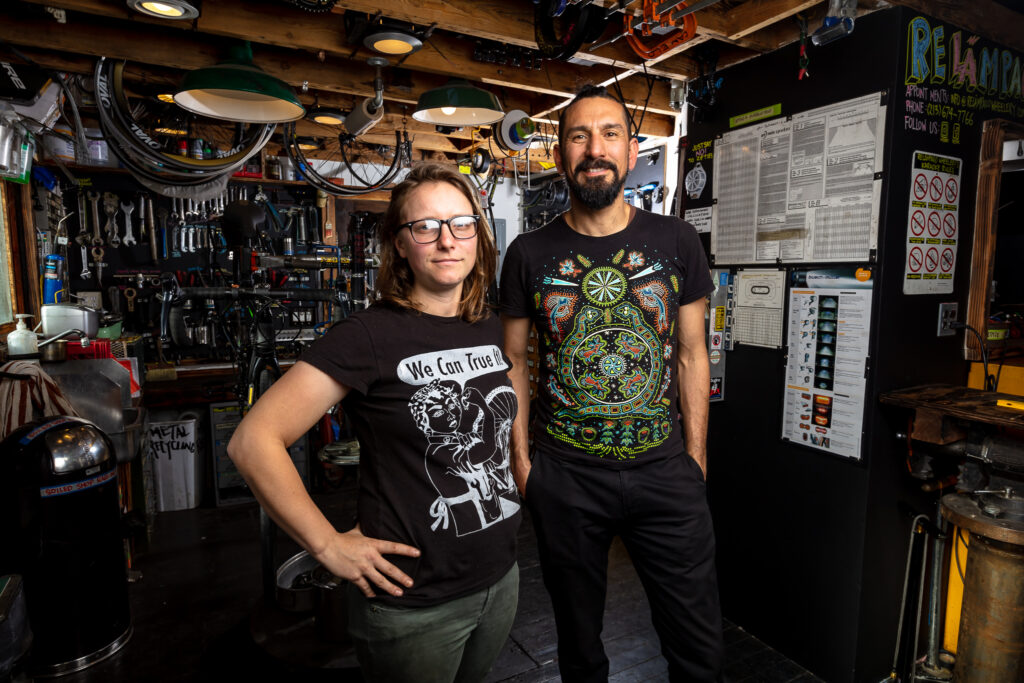
Relámpago Wheelery was founded by longtime Koreatown resident and USTU cooperative owner Jimmy Lizama. The project began when Lizama transformed a burned-down garage on a BVCLT-acquired property into a vibrant community bike shop.
Rooted in pedestrian advocacy and a vision for a car-free Koreatown, Relámpago Wheelery has grown into more than a bike shop. It now serves as an incubator for creative, community-centered initiatives, including BiciCrófono L.A., a karaoke-on-wheels project, and Re:Ciclos, a multidisciplinary build space that teaches basic to advanced art, mechanics, fabrication, and engineering. These programs aim to integrate bicycle technology into the everyday lives of communities, individuals, organizations, and small businesses.
Today, Relámpago Wheelery also serves as the headquarters for Don’t Shoot The Bike Messenger LLC, a bicycle-only legal delivery service, demonstrating how community-owned spaces can support sustainable, cooperative economic models.
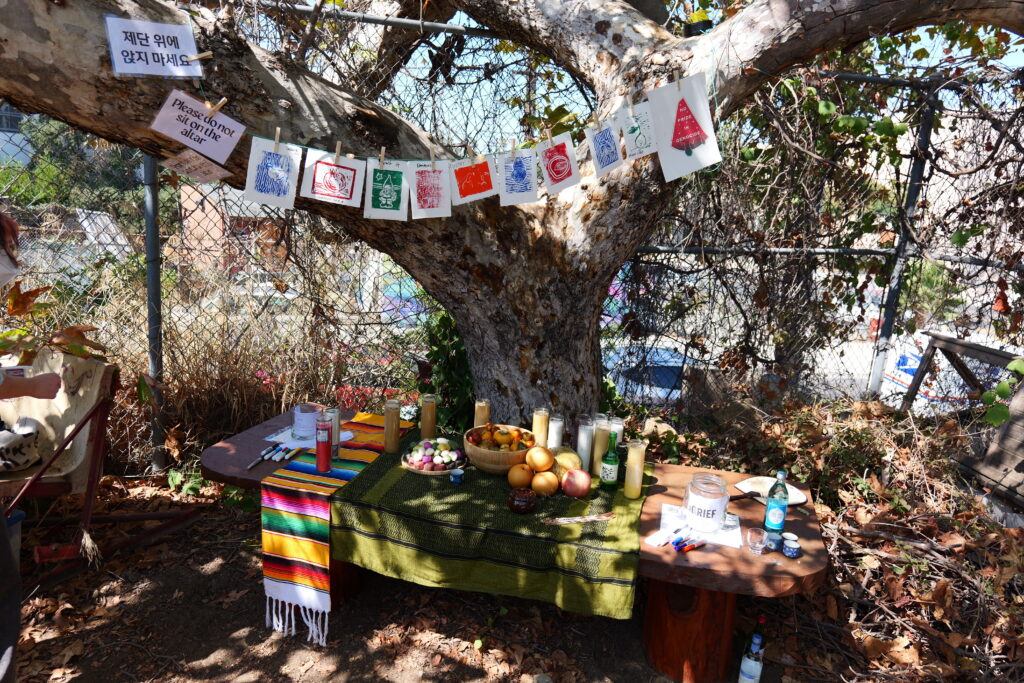
The White House Place Learning Garden began as an organizing project led by residents of USTU, White House Place, LAEVI, and surrounding community members. When the local school district moved to acquire nearby sites to expand a parking lot, residents pushed back. In a neighborhood with extremely limited green space, the community organized, gathered over 200 supporters, and petitioned for the inclusion of green space instead of a parking-only expansion.
With support from an architect, residents developed an alternative proposal that created the same number of parking spaces requested by the school district while also incorporating a green space. The site was ultimately leased to BVCLT, ensuring long-term community stewardship.
Originally designed as a learning space for local children to explore gardening, the garden has since evolved into a community garden open to organizers and Koreatown residents. Participants collectively decide what to grow in shared beds rather than individual plots, and they co-create the garden’s budget, design, and programming.
The garden has also become a site for cultural work, including Korean drumming, altar-making, fighter kite workshops, and paper-making. Today, it stands as a living example of collective land stewardship in practice.
